The History of the Gramophone: From Horns to Vinyl
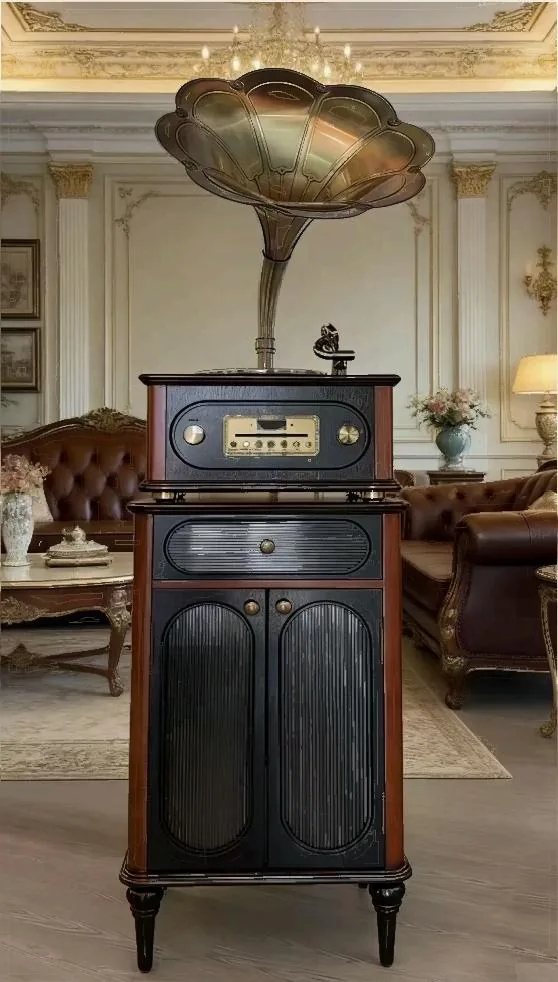
The gramophone is one of the most influential inventions in audio history. Its evolution — from a mechanical horn to the modern turntable — explains why vintage-style record players remain a steady retail category today.
1877: Edison and the phonograph
Thomas Edison recorded the human voice on a tinfoil cylinder in 1877, then improved it with wax cylinders. It was the first machine that could record and replay sound, though early cylinders wore out quickly and were difficult to mass-produce.
1887: Berliner and the flat disc
Emile Berliner's gramophone played flat shellac discs. Discs could be stamped out by the thousands, giving the gramophone the scale advantage that made it the dominant format by the 1910s. Early models used a large horn to amplify sound without electricity.
1920s–1950s: from horns to electric players
Electric amplification in the 1920s let manufacturers replace the mechanical horn with internal speakers. The cabinet-based record player — furniture you could put in a living room — became a household staple, and wood cabinets with classic styling became the standard for decades.
1948 onward: the vinyl LP and 45
Columbia introduced the 33⅓ RPM vinyl LP in 1948, and RCA followed with the 45 RPM single in 1949. Vinyl was lighter and quieter than shellac, and these two speeds — along with the earlier 78 RPM shellac — are the speeds modern players still support.
The vintage revival today
The vinyl revival brought record players back into homes, and with it a taste for the classic cabinet look. Modern 'gramophone' cabinets combine the historical silhouette — wood, brass accents, horn-inspired details — with today's electronics: a turntable plus CD, USB, radio and Bluetooth. That is why they appeal both to collectors and to buyers who simply want nostalgic furniture that actually plays music.
From a sourcing perspective, the lesson is simple: the styling sells the shelf, and the spec sheet sells the repeat order. Model support for 33/45/78 RPM, inputs and materials are the details that matter most.